The tour
Watch it work, from photograph to answer.
A receipt photographed and read line by line. The bills that never come with a receipt. A question asked out loud, in your own language. And a gauge for the month you are in, while the month can still be changed.
No password. You sign in with a six-digit code sent to your email.
The same tour, written
What is in the tour, step by step.
Photograph the receipt
One picture. Creased, folded, photographed at an angle in bad light — that is the normal case. ExpenseGauge reads the shop, the date, the total, the tax, the discounts, and every line printed on the slip.
Every item finds its own pocket
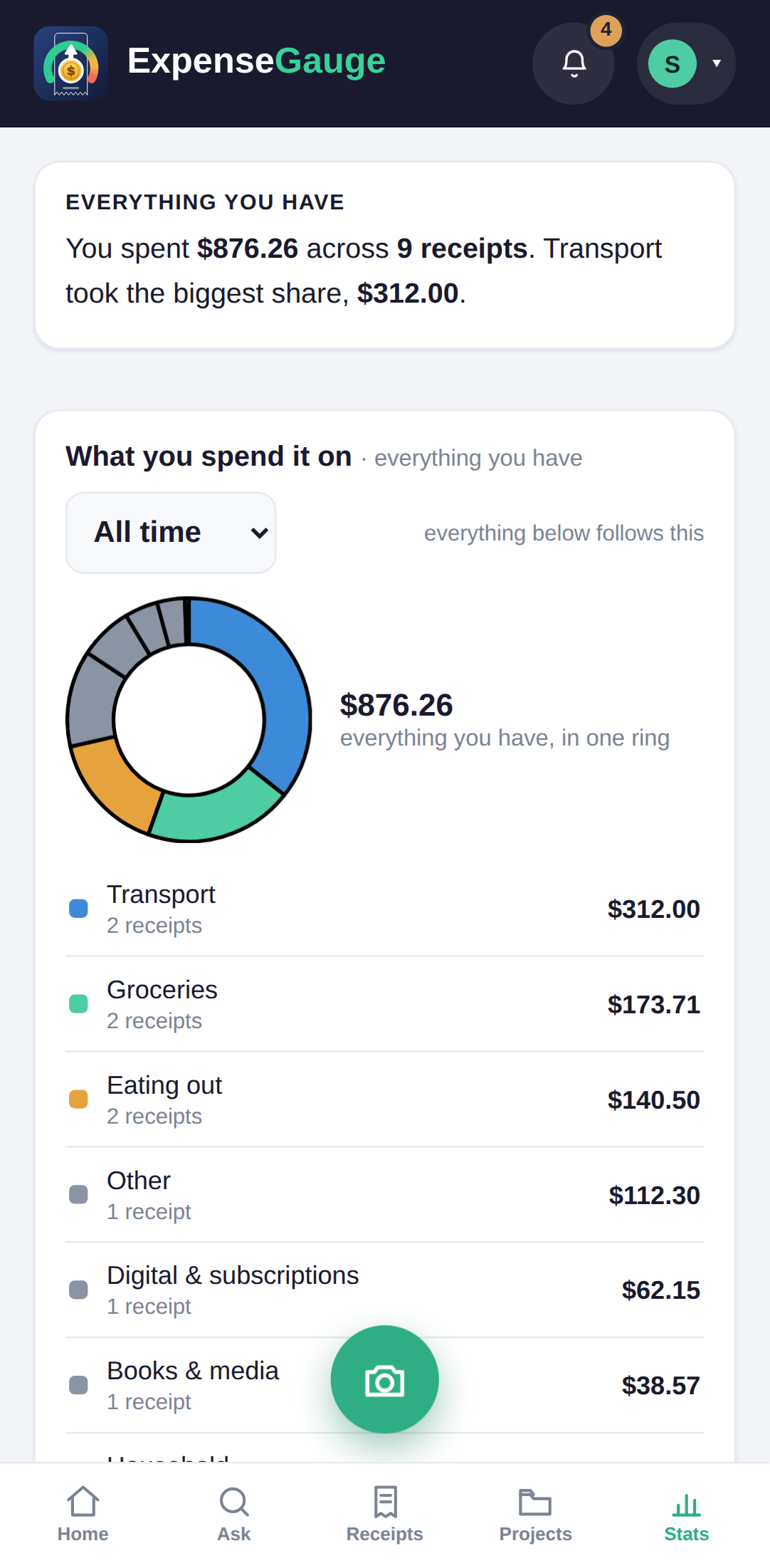
Groceries, eating out, household, transport. Nothing is asked of you here: the filing happens on its own, and the only work is putting right the ones it gets wrong — which it then remembers, for that shop and for that product.
The money that never comes with a receipt
Rent, the phone bill, insurance. Type one line the way you would say it — “rent is 1,400 on the first” — and every figure after that includes it.
Ask it out loud, in your own language
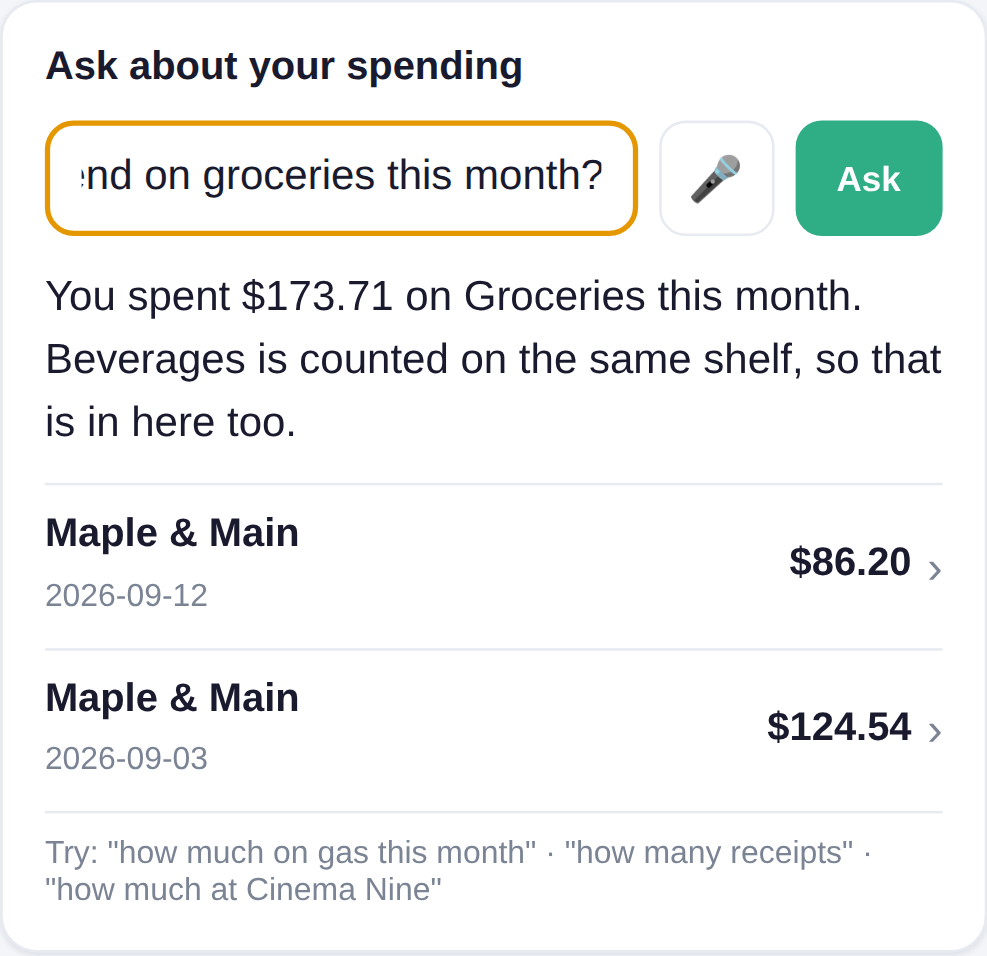
“How much did I spend on fuel this month?” in English, French, Spanish or Persian. The answer comes back in the language the question was asked in.
Two currencies, two totals
Back from a trip with pounds and dollars in the same pile. Pounds stay pounds. Each currency keeps a total of its own instead of being flattened into one wrong number.
A project with a ceiling
Give a renovation, a trip or an event a budget, and it says how much room is left before you cross it — not afterwards.
Six people, one bill
Split it equally, or by the share each person agreed to. Everyone gets their own slip, and what each of them still owes is kept.
Work you bill to a client
Keep a job’s receipts together. When the client pays, the payment comes off what is owed, and the job carries its own total until it is finished.
Returns and warranties, before they run out
Set the day a return window or a warranty ends. It tells you while there is still time, instead of leaving you to remember too late.
A gauge for the month you are in
What is left, and what that comes to a day. It moves as you spend, and when a pocket runs higher than your own usual it says so in one sentence.
Nothing in the film is staged. The receipt is a real one, read by the reader that runs in the app, and where it could not make the lines add up to the printed total it says so rather than hiding the difference.
Start with one receipt.
Nothing to install. It runs in the browser on any phone, and it can live on your home screen like an app.